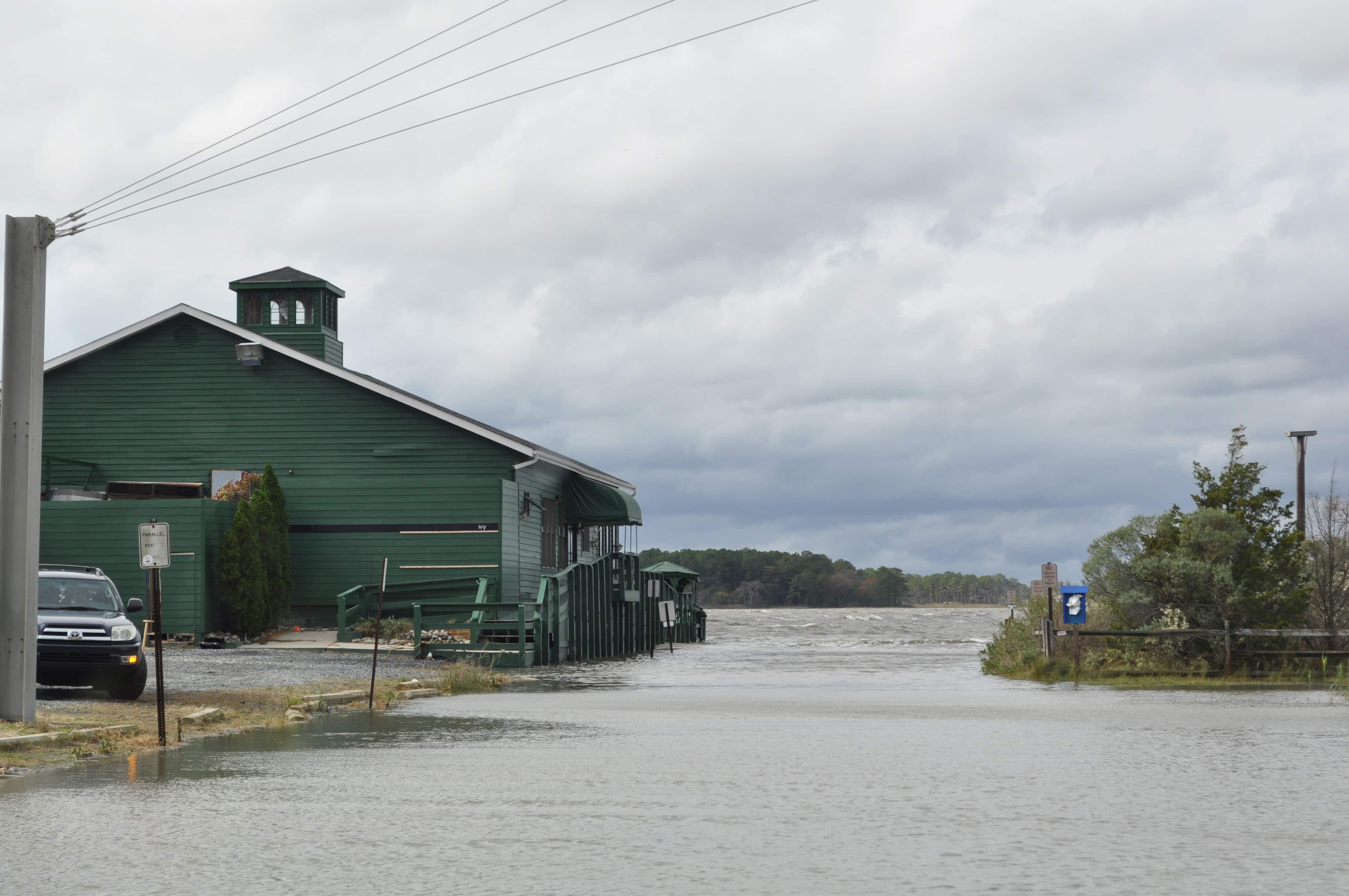
September marks the beginning of Hurricane Season for many parts of the U.S., including Delaware, and if you live alongside the ocean or our inland bays and creeks you might face greater risks of flooding. But living inland, surrounded by woods, marshes and roads, doesn’t mean you’re not also at risk because flooding can happen for other reasons too. Your property could be at risk from nearby construction that alters the flow of water during a hard rain, rising water tables, or being at a lower elevation than surrounding properties.
So it’s important to know your flood risk and whether or not you need flood insurance for a new home or your existing home. And the absolutely most important thing to know is that most regular homeowners insurance policies do NOT cover flooding. While policies through the private insurance market are becoming more available, the primary way to insure your home from flooding is with a special policy from the National Flood Insurance Program (NFIP), which for decades has been funded by the Federal Emergency Management Agency (FEMA).
But there are also some complications we all need to be aware of.
Right now, the NFIP’s authorization through FEMA’s congressional appropriation is set to expire on September 30th. If Congress doesn’t reauthorize the program by that date, the NFIP probably won’t be able to issue policies, which will obviously have a big impact on real estate transactions. So of course realtors – and their interest groups – are advocating for the reauthorization. But if you’re considering a property in a high or moderate risk area (based on criteria set by the NFIP), it’s worth your time to follow the negotiations around this program (and you can certainly count on a post on this blog detailing the final decision near that date).
In the meantime, here are some quick facts about flooding and the NFIP.
PRIMARY RISK FACTORS FOR FLOODING OF YOUR HOME
As noted above, homes alongside the ocean, bays, rivers and lakes or those at a lower elevation than surrounding properties tend to be at higher risk. But the following factors related to the design and construction characteristics of your home or business raise potential dangers as well
- Having a foundation that’s underground or at ground level
- Living on the first or low floors of a multi-unit building
- Having wood-framed walls as opposed to masonry walls
- Living or owning a building with heating and air conditioning units, electrical panels, hot water heaters in basements
- Living in a home that’s adjacent to or near to new construction or a major remodeling project that could alter the flow of water run-off. In other words, a new building or paving that directs run-off toward your property when this hasn’t been a problem in the past.
ASSESS THE LIKELIHOOD THAT YOUR PROPERTY WILL FLOOD
Agents who manage homeowner policies are typically well-versed in flood insurance offerings. That means they’ll be able to tell you – based on FEMA and NFIP data – whether you’re in a low-risk, moderate-risk or high-risk area. Fortunately or not, many insurance agents are determined to help you pay less for insurance and may tell you that you don’t need flood insurance if it isn’t required. While that’s true, costs for flood insurance are surprisingly low, so it’s worth finding out what it’ll cost for this extra piece of mind. In doing so, you should also know that nearly one-third of flood claims paid through the NFIP have been for properties outside high-risk zones.
To learn more about the different risk zones, the risk of flooding in your own zip code, and a preliminary quote for a policy, visit this link at the NFIP’s Floodsmart program https://www.floodsmart.gov/flood-zones-and-maps/what-is-my-flood-risk.
You can also learn about past claims in your area and view flood zones and flood maps for your area and nationwide at https://www.floodsmart.gov/flood-zones-and-maps.